Why most brand photos miss, and what changes when the shoot is actually planned
You’ve probably been here. You hire a photographer. The photos come back, they look fine, maybe even great. You post one to LinkedIn. You swap your website header. And six months later, you’re still not using most of them, because they don’t quite fit anywhere. You couldn’t say why. They just don’t feel like the business you actually run.
That’s not a photography problem. It’s a planning problem.
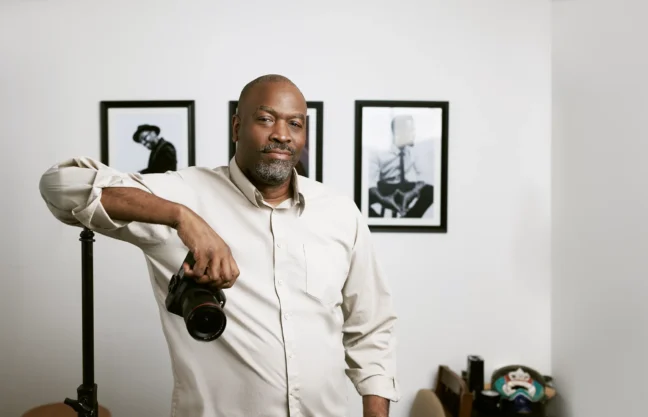
The thing nobody tells you about brand photography
Most brand photo sessions are run the same way a wedding photographer runs a portrait session. You show up at a location, the photographer puts you in some light, you shift your weight a few times, they take a couple hundred frames, you pick the ones where you look the least uncomfortable.
The result is usually a set of photos that looks technically good and serves no specific purpose. They’ll work for a headshot. They might work for a website hero. They probably won’t work for your speaking bio, your press kit, your Instagram Reels, your proposal cover, or the next launch you have coming up. So you’ll need to hire someone again in a year. Or you’ll keep using the ones that don’t quite fit, because the alternative is worse.
This is the gap I built my entire process around. Before I ever pick up a camera, I sit down with you and we figure out what your business actually needs the photos to do.
What planning actually looks like, in practice
When you book a session with me, the first thing on the calendar isn’t the shoot. It’s a conversation. I call it an Alignment Session, and the whole point is to make sure that by the time we’re standing under the lights, every shot has a job.
Here’s the kind of thing we work through:
Where will these photos live. Your website hero is a different shot than your LinkedIn banner, which is a different shot than your press kit photo, which is a different shot than the image that opens your nurture sequence. If we don’t know where the photos are going, they end up being decent for everything and exceptional for nothing.
What story are they telling. Your brand has a position. You’re not just “a coach” or “a consultant.” You stand for something specific, against something specific. The photos should make that visible without saying a word. Most photographers will skip this question entirely. It’s the most important one we ask.
Who you actually are on camera. Not who you think you should be. Not the LinkedIn version of you. The version your best clients already see in you. Photos that look like that version are the ones you actually want to use. The other ones sit in a folder.
What you’re nervous about. I ask this directly, because if I know what you’re afraid the photos will look like, I can build the session to make sure they don’t look like that. Most people are afraid of looking stiff, dated, or trying too hard. That’s a planning issue, not a face issue.
By the end of that conversation, I write a shoot brief. A real document. It maps every location, every outfit, every shot, and the specific business purpose each one serves. You see it before we shoot. You can change anything in it before we shoot. And on the day of the session, neither of us is guessing.
What changes when the shoot is planned
A few things shift, in ways that show up later.
Your face relaxes. When you walk into a shoot already knowing what we’re doing, what you’re wearing, what the first shot is, and why we’re starting there, your face stops asking those questions in the background. People who look natural in photos aren’t more photogenic than you. They just had more information going in.
You use more of the photos. Most clients I talk to tell me they use maybe a third of the images they got from past photographers. With a planned shoot, that number goes up dramatically, because each image was built to do a specific job. The website hero shot was framed for a website hero. The press kit portrait was lit and composed for press. The candid-feeling Instagram shots were planned to feel candid.
The photos last longer. When the shoot is built around your business strategy, not just a vibe, the images keep working as your business grows. They don’t go stale six months later when you launch a new service or pivot your messaging. They were planned around the direction you were already heading.
You stop dreading the next shoot. This is the quiet one. When clients work with me a second time, the conversation is shorter because I already know the business. We refresh, we add what’s new, we sharpen what’s working. The photos compound instead of restart.
What I do differently, and why it matters
I’m not the only brand photographer in Austin. I am, as far as I can tell, the only one whose entire process leads with business strategy before the camera ever comes out. Here’s what that actually means for you.
Most photographers in this market sell sessions. I sell a system. The system has three parts that work together.
Strategy first. Every session starts with the Alignment Session I described above. By the time we’re shooting, we’re executing a plan, not improvising.
Confidence built in. I have a specific process for helping people show up as themselves on camera, not the stiff performance version. Every shoot brief includes notes on what you said you were nervous about and exactly how we’ll handle it. The shoot order itself is built so you warm up before the most important shots, not the other way around.
Ongoing partnership. I’m not a one-time hire. Most of my clients come back, because their businesses keep evolving and their content needs to keep up. The second shoot is always better than the first, because we already know what works for you.
When you put those three together, what you’re really buying isn’t photography. You’re buying the gap between how good your business actually is and how confident you feel letting people see it. That gap is the whole point. The photos are just how we close it.
If you’ve been putting this off
There’s a specific frustration that brings most people to this page. You’ve built something real. You’re proud of the work. And every time you send someone to your website or hand them your card, you wish the visual brand told the whole story instead of half of it.
That gap doesn’t fix itself. And the longer you wait, the more first impressions are being made on photos that don’t quite match the business you actually run.
If you’re tired of that gap and ready to close it, the next step is small. We get on a call. No commitment, no pitch. Thirty minutes where we talk through your business and I tell you honestly whether I think a planned shoot is the right move for where you are.
That’s not a sales call. That’s the first step of the process. And it’s where I tell most people the same thing I’ll tell you, which is that the photos are the easy part. The hard part is knowing what you actually need them to do. That’s what we figure out together, before anything else.
Read a sample Brand shoot plan here
Eric Coleman is a brand photographer in Austin, Texas. He works with established service-based business owners whose visual brand hasn’t caught up with the business they’ve built. Brand photography built around your business, not just your smile.